Skip to content

Using Tags

This guide is for editors and owners who keep content organised with tags. Tags are shared labels you put on pages, articles, and other content so readers and editors can group and find related things. No technical knowledge needed. Every step uses the labels you see on screen.

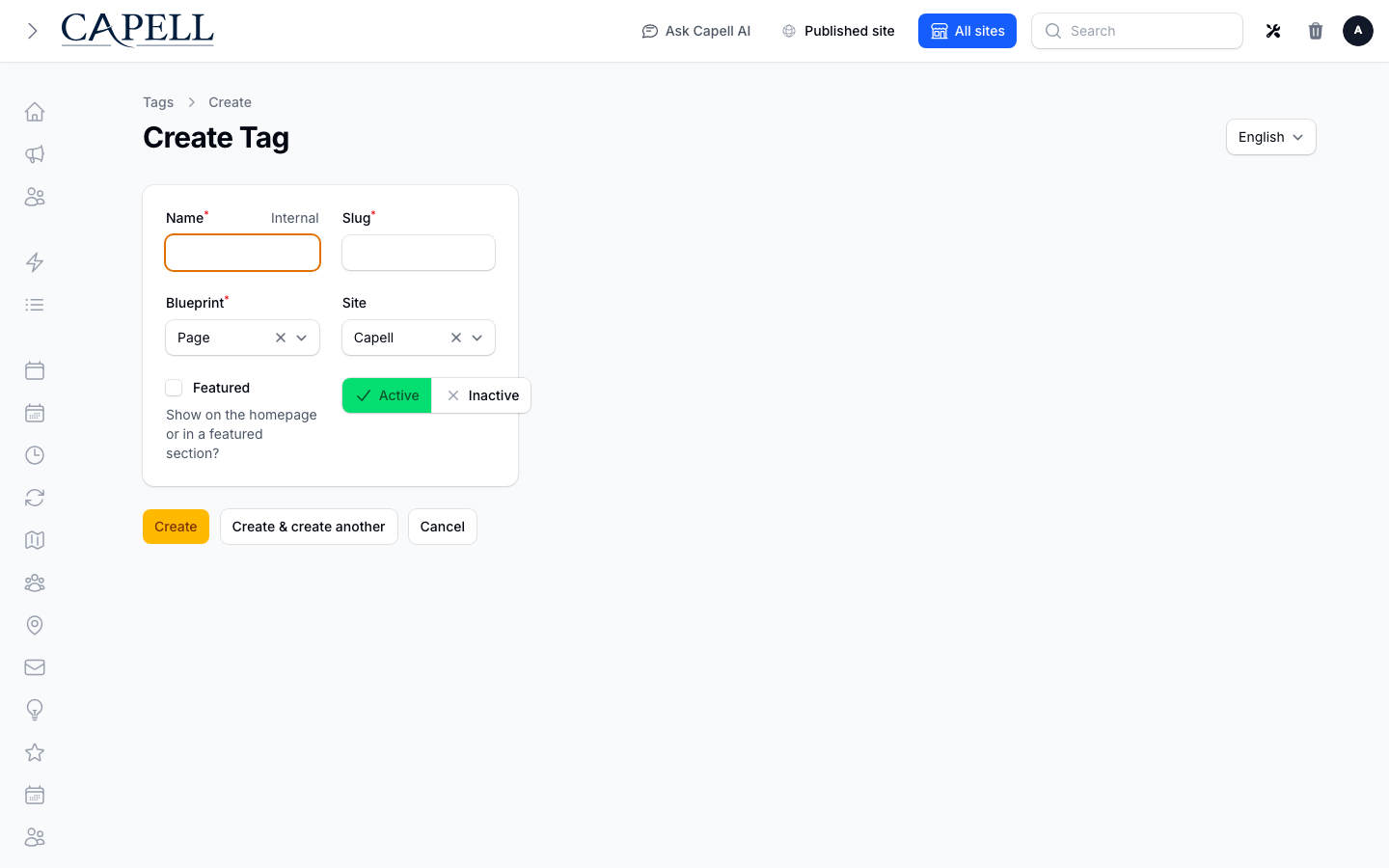
  1. Go to Tags in the admin.
  2. Click New tag.
  3. Enter a Name. This is the label people see, for example “Product news”.
  4. Under Tag details, the Slug fills in from the name. The slug is the short web-safe version used in links. You can adjust it if you want.
  5. Choose a Type (for example Page, Article, or Content). The type decides which kind of content the tag belongs with.
  6. If you run more than one site, pick the Site the tag belongs to.
  7. Tick Featured if you want this tag highlighted ahead of others.
  8. Leave the status set so the tag is enabled, then save.
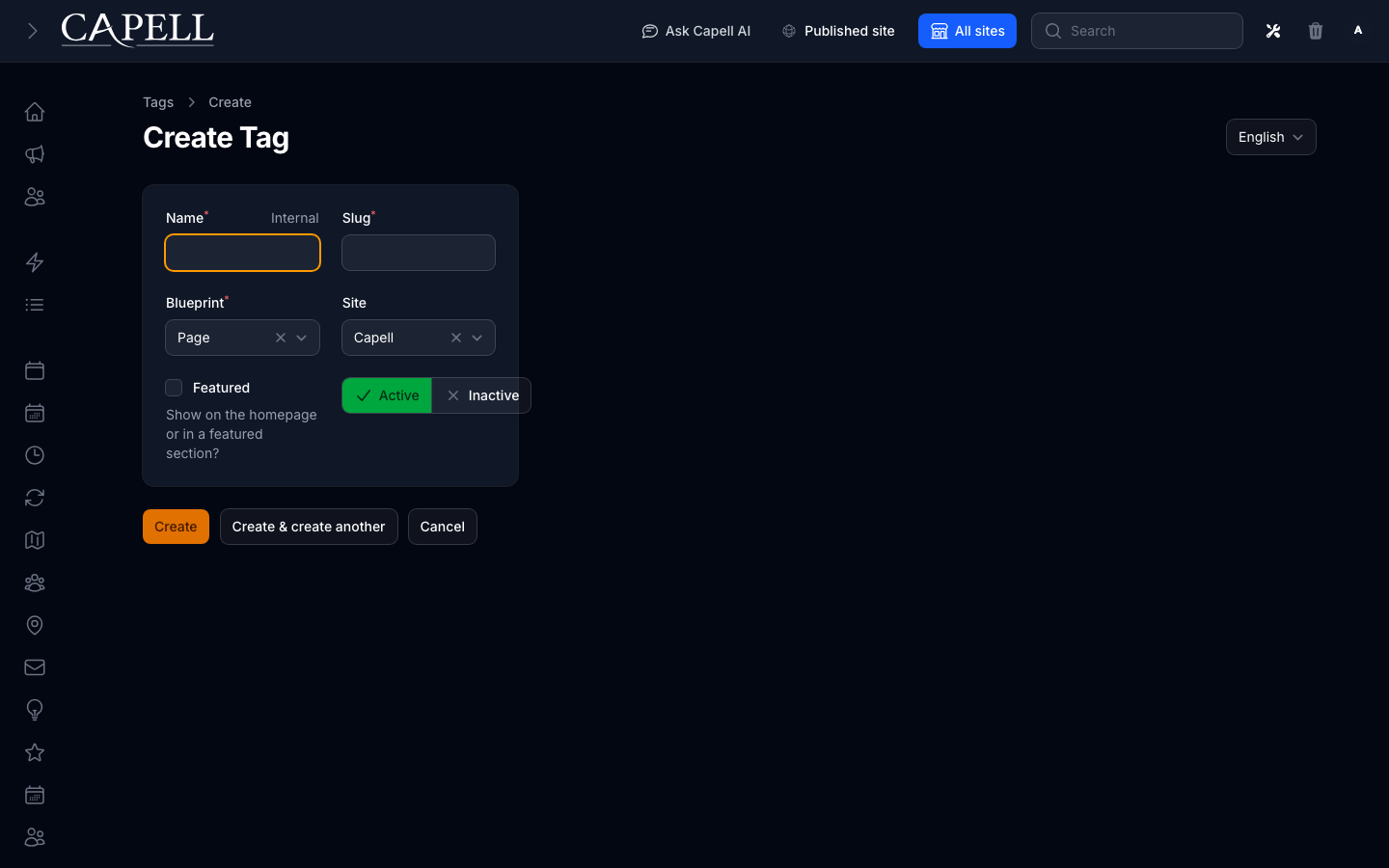
An editor creates or updates a tag name, slug, locale, and taxonomy metadata. An editor creates or updates a tag name, slug, locale, and taxonomy metadata.

How to review your tags and how much they are used

Section titled “How to review your tags and how much they are used”
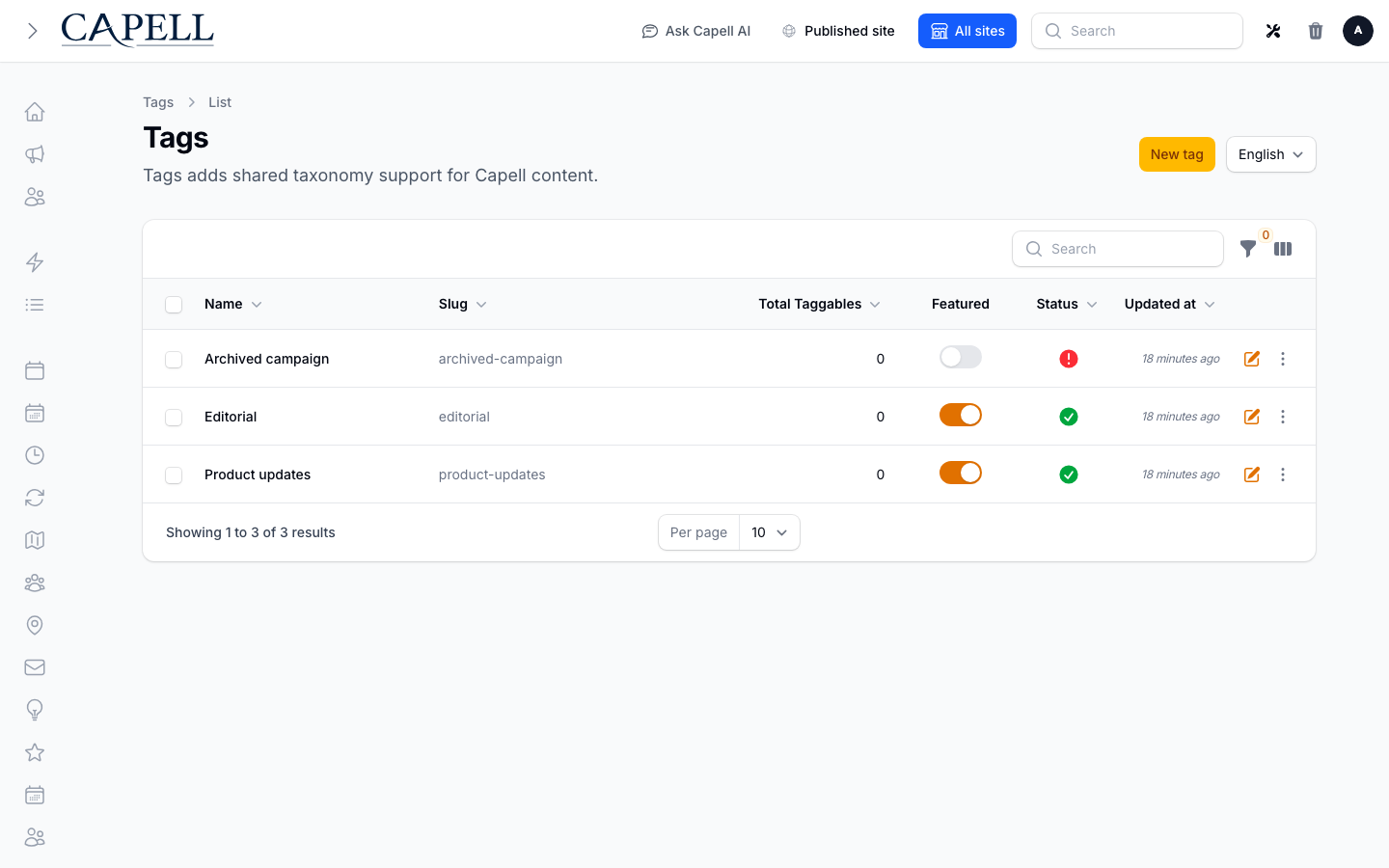
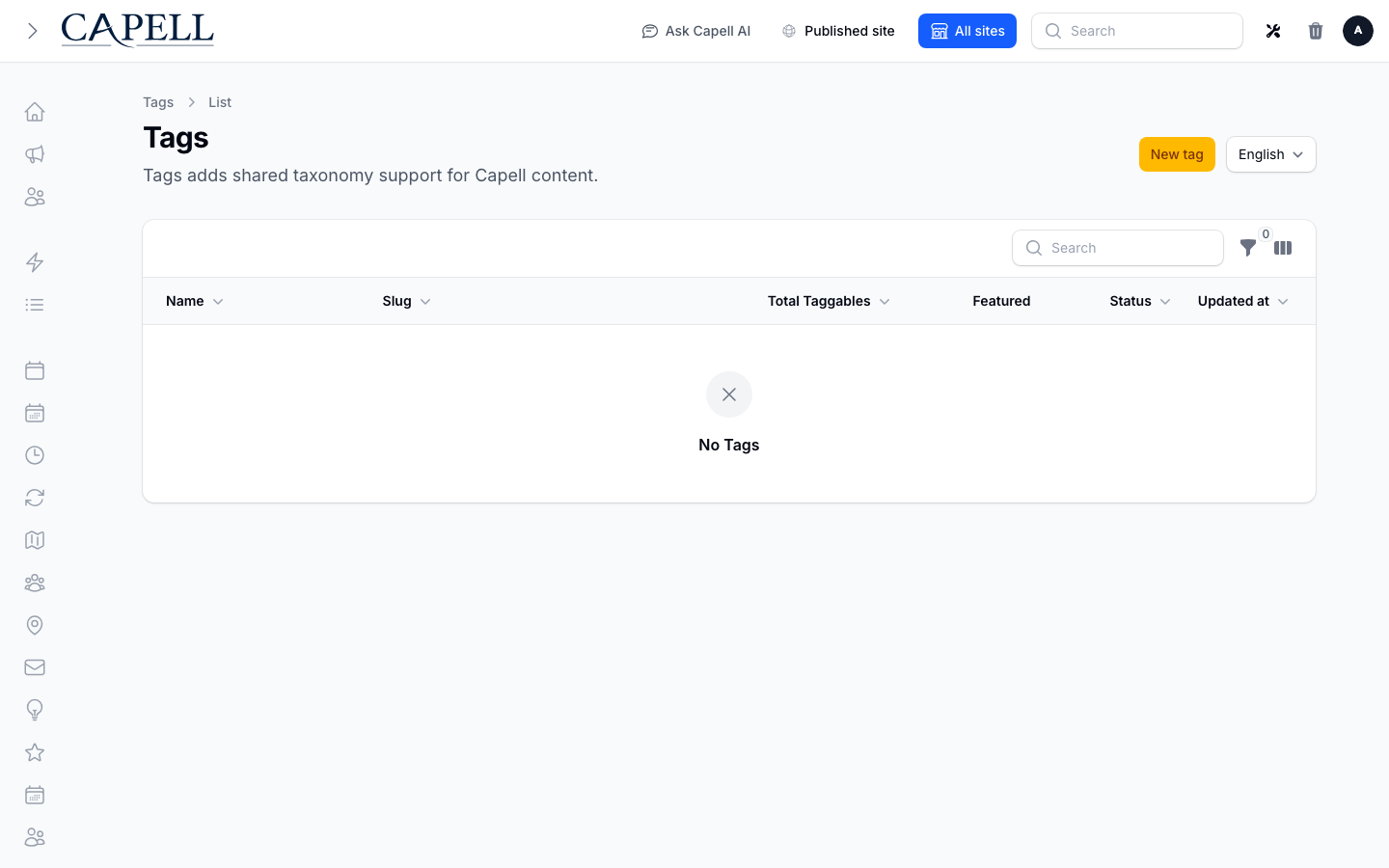
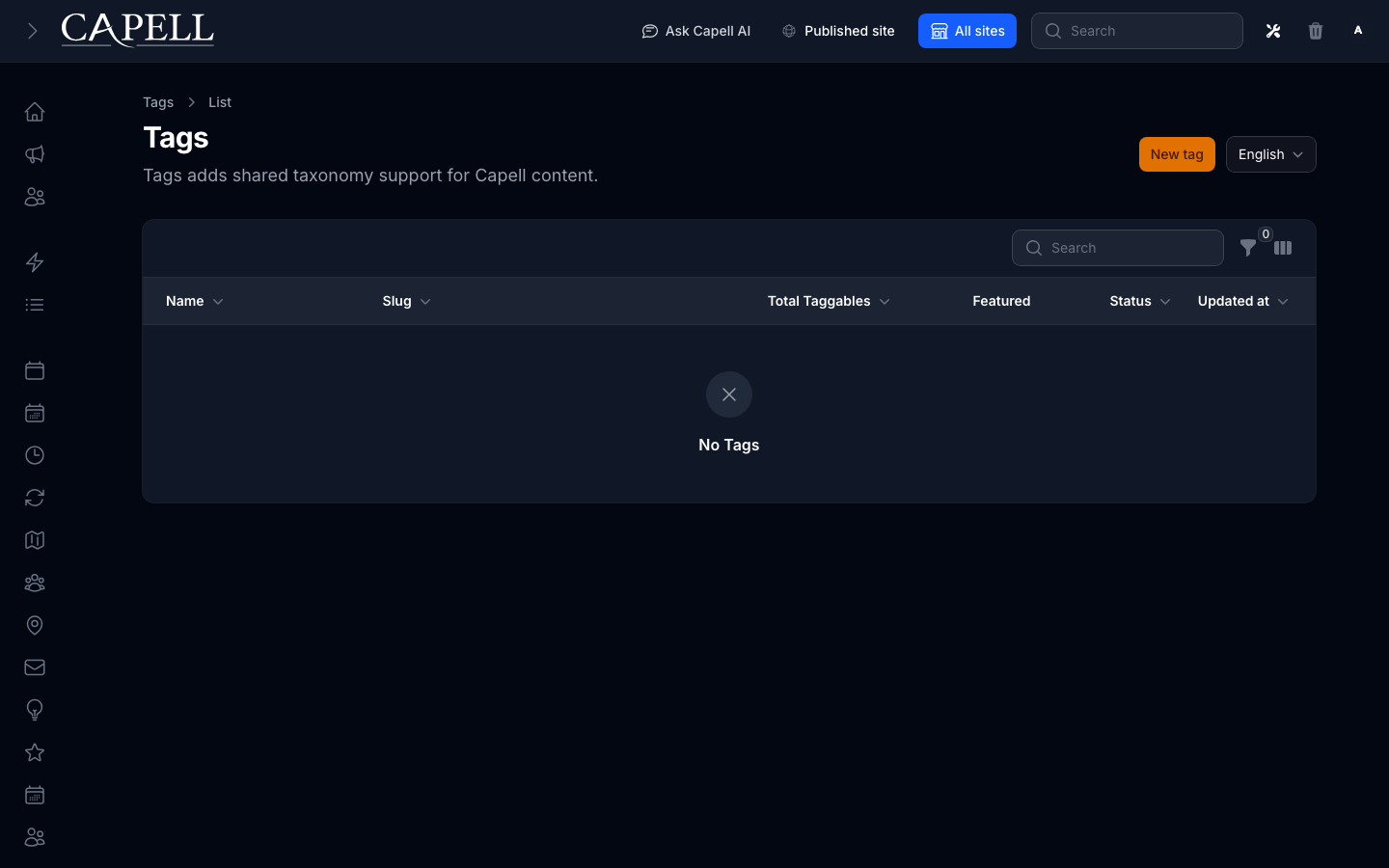
  1. Go to Tags.
  2. The list shows each tag’s Name and Slug.
  3. Select Total Taggables to open usage grouped by content type and site. You only see records you may view; unavailable records remain counted without exposing their details. Follow a record link where its admin resource offers one. The column shows how many items carry each tag. A high number means the tag is widely used; a low number may mean it can be merged or removed.
  4. Use the column controls and filters at the top of the list to narrow by Site, Featured, or status.
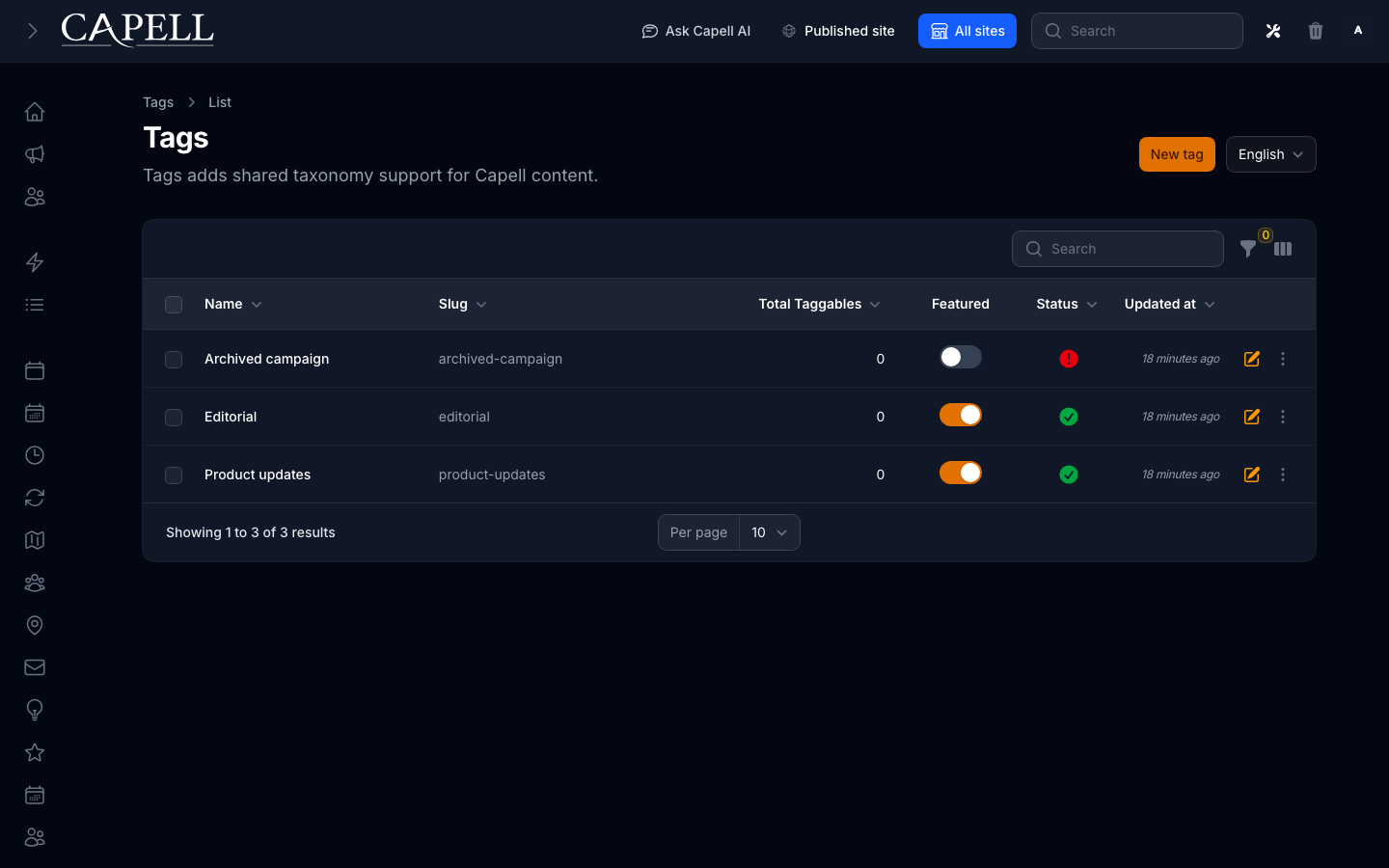
An editor reviews taxonomy tags and their usage state. An editor reviews taxonomy tags and their usage state.
  1. Open the page or article you want to tag in its own editor.
  2. Find the tags field on that form.
  3. Start typing a tag name. Matching tags appear so you can pick an existing one, which keeps your tags consistent.
  4. Add as many tags as fit the content, then save the page or article.
An editor assigns tags from a host page or article form using the shared tags field. An editor assigns tags from a host page or article form using the shared tags field.
  1. Go to Tags and open the tag you want to inspect.
  2. Look at the Pages section on the edit screen. It lists the pages currently tagged with this tag.
  3. Review this list before you rename, merge, or delete a tag, so you know what will be affected.
An editor reviews pages or records attached to a tag before changing it. An editor reviews pages or records attached to a tag before changing it.
  1. Go to Tags.
  2. Tick the boxes next to the duplicate tags you want to combine (for example “news” and “News”).
  3. Choose Merge tags from the actions at the top of the list.
  4. In the dialog, pick the Target tag. This is the single tag everything will move into and the one you keep.
  5. Continue to Review merge. Check the sources, target, affected records, duplicate assignments and preserved slug aliases for each language.
  6. Choose Apply merge. The source tags are deleted and their assignments move to the target; shared assignments remain a single row. If the selection or underlying tags change, review again before applying.

Merging is permanent. The tags you merged go away and their content now carries the target tag instead. Tags must share the same Type and Site as the target to be merged together.

  1. Go to Tags and open the tag, or use the row actions in the list.
  2. Check the Pages section first to see what is tagged.
  3. Choose the delete action. The tag is removed from the content that used it.
  4. If the tag is a near-duplicate of another, prefer Merge tags instead so you do not lose the grouping.
  • A small, agreed set of tags. Decide on a handful of clear tags before editors start applying them. A short consistent list is far more useful than many overlapping ones.

NeedWhat to use
Group content so readers can browse by topicApply consistent Tags to pages and articles
Highlight a few important tagsThe Featured option on a tag
Clean up overlapping or misspelled tagsMerge tags into one canonical tag
Keep tags separate per siteSet the Site on each tag
RoleFirst useful screen
Writer / editorThe tags field on a page or article: apply existing tags
Site ownerTags list: create tags, watch Total Taggables, and merge duplicates
What you seeWhat it meansWhat to do
Two very similar tags in the listThey are likely duplicates (for example “news” and “News”)Select both and use Merge tags, picking the Target tag to keep
A tag has a low Total Taggables countFew or no items use itConsider merging it into a broader tag, or removing it
You cannot merge two tagsThey use a different Type or Site than the target tagOnly merge tags that share the same Type and Site
A slug warning appears when savingAnother tag already uses that Slug for the same type and siteChange the Slug to something unique
Content is hard to find on the siteTags are inconsistent or missingAgree a small tag set, apply it consistently, and merge the variants